
OEM answer
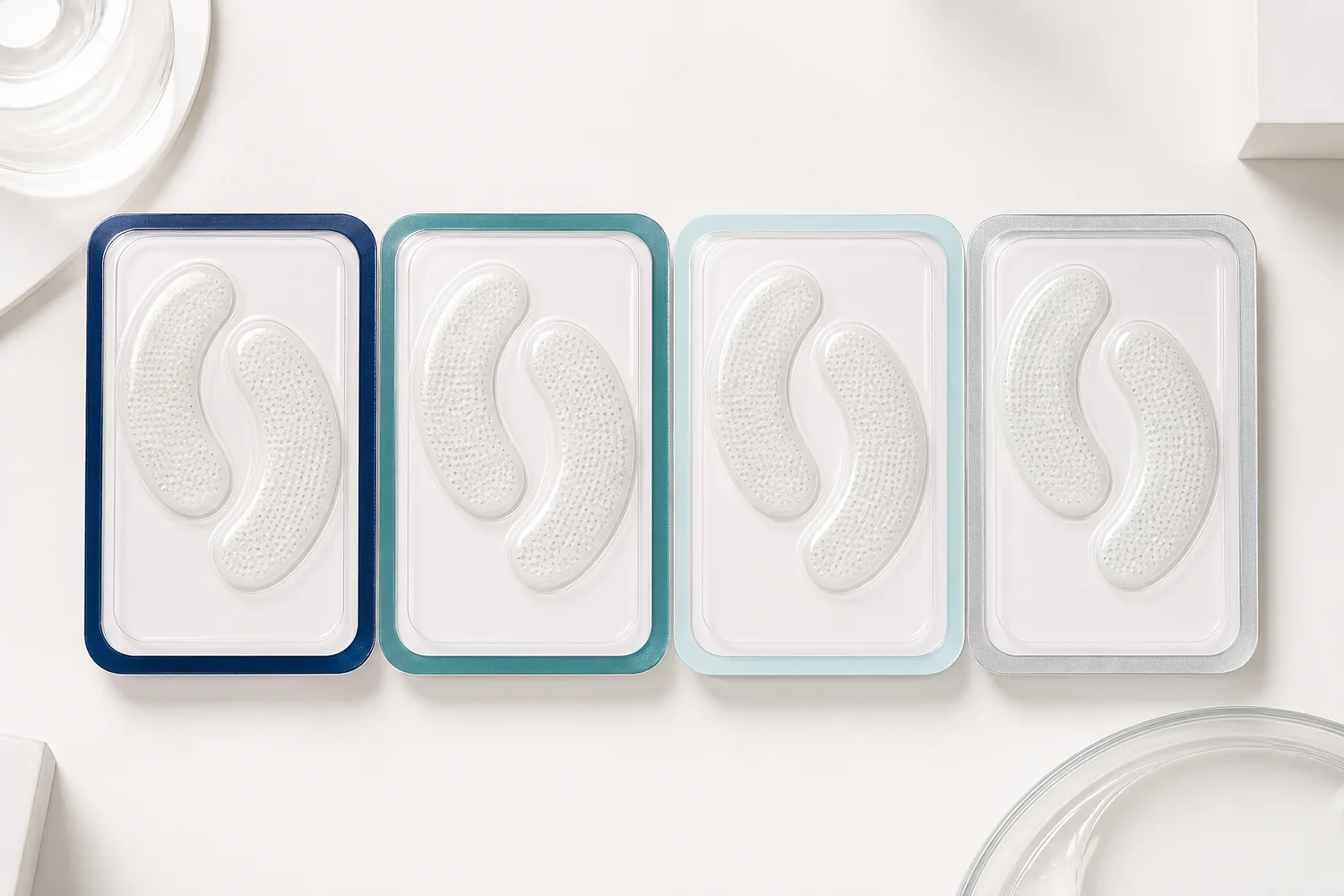
Private-label caffeine microneedle eye patch concepts for tired-looking and puffy under-eye appearance. The finished specification is developed around intended market, formula compatibility, crescent geometry, array integrity, backing, barrier packaging and responsible eye-area directions.
Recommended product brief
Positioning
De-puff and refreshed-eye positioning
Formula direction
Caffeine with compatible hydrating and soothing cosmetic ingredients
Cosmetic claim territory
Hydration and improved appearance of temporary under-eye puffiness and fatigue
Custom options
Patch contour, array area, backing, wear instructions, pouch, carton, pair count and private-label artwork.
What must be confirmed during development
- Category and use area: confirm cosmetic classification, eye-area suitability, intended frequency and destination-market constraints.
- Matrix and active compatibility: evaluate pH, water activity, mixing, time, temperature, oxidation and distribution within the micro-array.
- Geometry and handling: align needle height, base width, density, array footprint, crescent contour, backing stiffness and application pressure.
- Finished-pack evidence: plan integrity, dimensional, microbiological, stability, packaging and appropriate safety or claim substantiation for the actual product.
Customization and commercial planning
A standard platform can reduce development time. A custom formula, exclusive geometry, new tooling or complex retail pack may improve differentiation but also changes feasibility work, testing, MOQ, cost and lead time. We provide project-specific assumptions after reviewing a non-confidential brief.