
How does the format work?
A dissolvable micro-array is designed to contact the outer skin surface and dissolve with moisture during use. Product behavior depends on the complete finished system: matrix chemistry, active compatibility, geometry, structural integrity, backing, package barrier and instructions.
Matrix and active development
Potential matrices can use hyaluronic acid or other suitable water-soluble polymers. Development must consider viscosity, casting or filling behavior, drying, residual moisture, mechanical integrity and interaction with cosmetic actives. Total ingredient content does not automatically prove where an active is distributed within the array.
Eye-area geometry
Crescent contour, array footprint, needle geometry, pitch, patch flexibility and edge design influence handling and under-eye fit. A larger array is not automatically better; the design must remain manufacturable, comfortable and compatible with the intended instructions.
Activity-sensitive processing
Temperature is only one variable. pH, oxygen, light, moisture, mixing energy, hold time, drying endpoint and packaging transfer can also affect sensitive ingredients. Process claims should be tied to measured controls and appropriate analytical evidence.
Barrier packaging
Dissolvable matrices are often moisture-sensitive. Primary pouch selection, seal integrity, headspace, secondary packaging, storage statement and shelf-life plan should be evaluated together for the actual finished product.
Keep each formulation profile distinct.
The catalogue’s geometry-led and ingredient-led examples are separate configurations. Do not combine their specifications or presume that the same ingredient system applies to every format.
Separate three-grade HA eye-care profile
Hyaluronic acid in three molecular-weight grades, plant-derived salicin and niacinamide
Catalogue fine-line care, skin firmness and the appearance of eye bags and dark circles; finished-product evidence is required
Peptide eye configuration
Acetyl Hexapeptide-8, Hexapeptide-9 and Tripeptide-1
Cosmetic eye-area appearance development
Geometry-led blemish profile
Salicylic acid, asiaticoside and PDRN
Targeted blemish-patch research configuration
Botanical blemish-care profile
Plant-derived salicin, madecassoside, Sophora flavescens root extract and sodium hyaluronate
Blemish-prone skin and the appearance of post-blemish marks; catalogue acne-care positioning requires market review
Targeted facial profile
Niacinamide and glabridin
Cosmetic tone and dark-spot appearance development
Three-grade HA brightening profile
Hyaluronic acid in three molecular-weight grades, plant-derived salicin and niacinamide
Brightening and the appearance of pigmentation and dark spots
Product illustrations for separate beauty profiles.
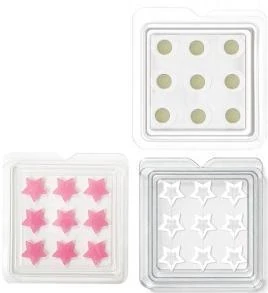
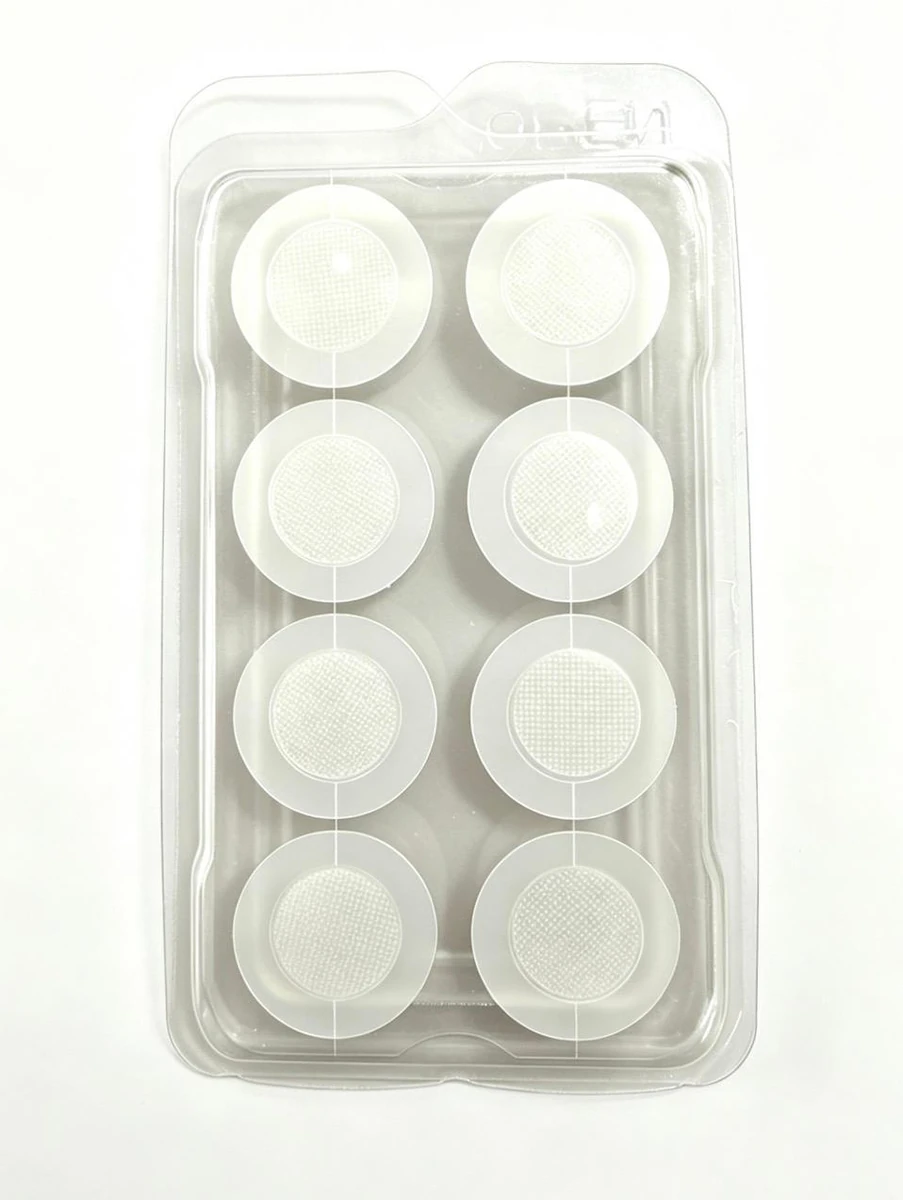
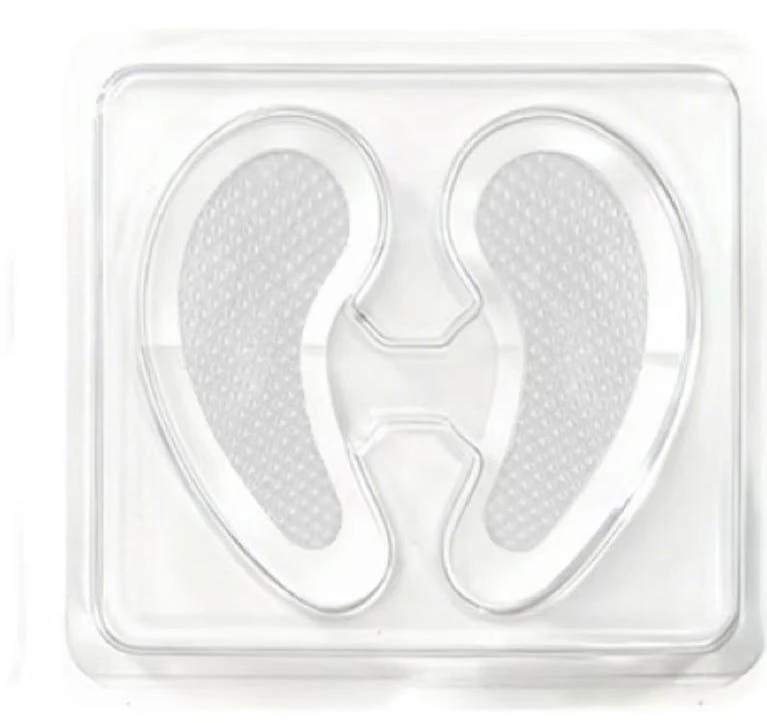
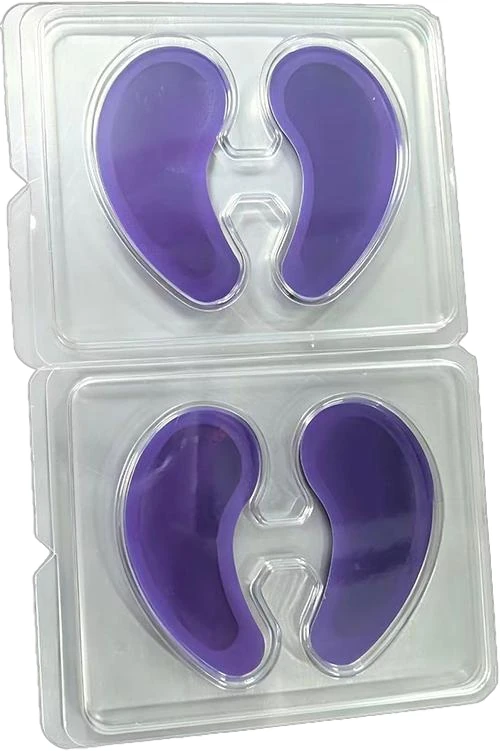
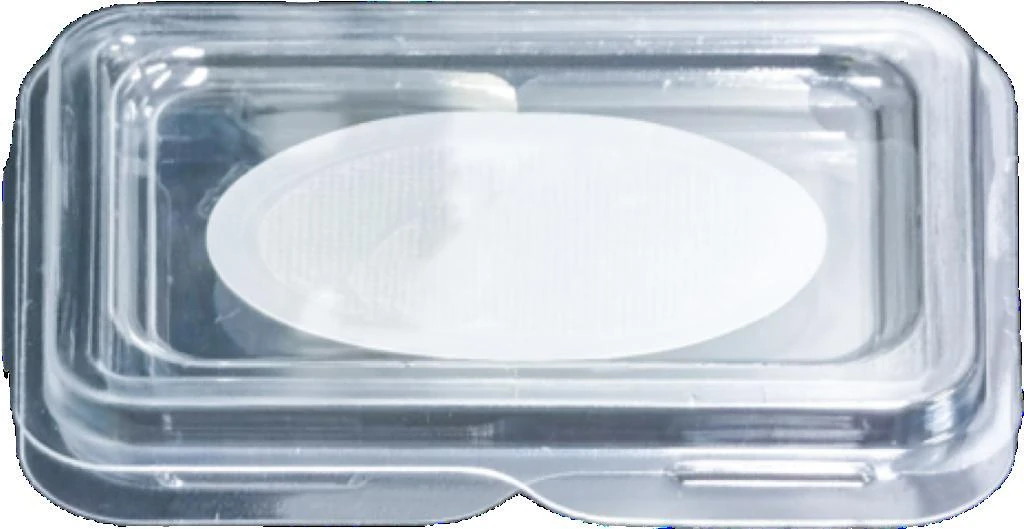
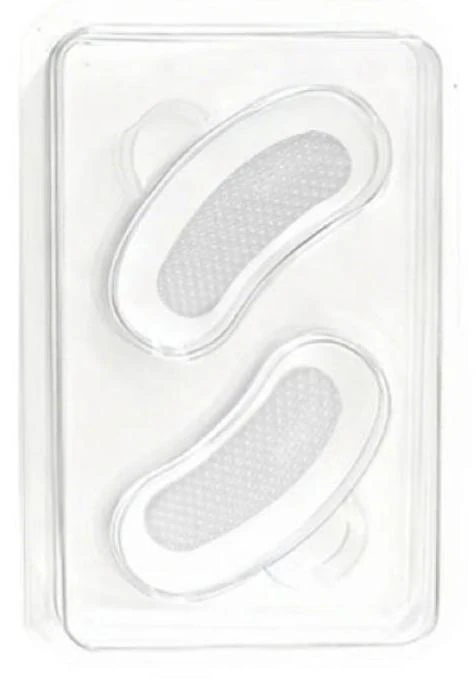
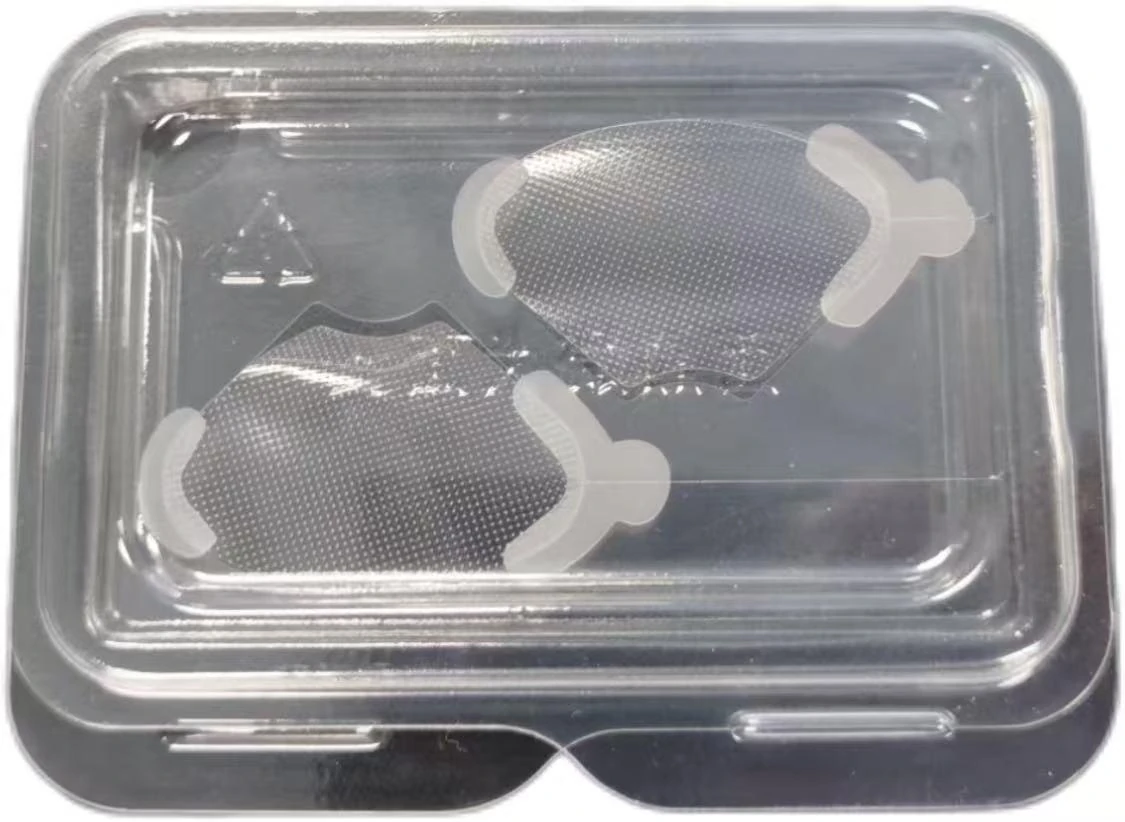
Geometry is specified for the project.
- Catalogue nominal height envelope
- 100–1,000 µm across separate configurations
- Needle spacing reference
- 500–1,000 µm
- Standard patch formats
- Round; rounded square; crescent eye patch; T-shaped nasal patch
- Custom tooling directions
- Nasolabial strips, contour shapes, larger body patches and specialty designs
- Additional appearance options
- Patch size, color and active loading to the brief
100–500 µm group
The catalogue associates this range with eye, sensitive-skin and acne-format concepts.
600–800 µm group
The catalogue associates this range with professional anti-wrinkle and repair concepts.
800–1,000 µm group
The catalogue associates this range with body-care concepts.





Dissolving HA and solid PLA are distinct platforms.
A dissolving array relies on a water-soluble matrix. A solid PLA tool is a non-dissolving structure with different handling, intended-use and regulatory questions. Dissolving HA roller heads are listed separately from non-dissolving PLA rollers.
Review solid PLA component configurations ↗Source: HYTANBIO Microneedle Product Portfolio, Changzhou Base, 22 pages. Integrated and reviewed 15 October 2026. Catalogue values are configuration references, not finished-product clinical evidence or market authorization.
Download the complete source portfolio · Discuss a configuration brief